|
 |
 |
 |
 |
 |
 |
 |
 |
 |
||||||||
OUT NOW 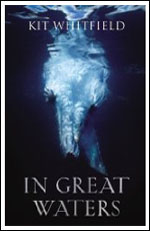 |
| BUY THE BOOK |
|
|
 |
| BUY THE BOOK |
 |
| BUY THE BOOK |
In a tense, divided court, a young princess watches her mother struggle to hold the throne. On a remote coastal estate, a scholar finds a child washed up on the shore. Anne. Henry. A Christian princess of the royal blood. A pagan bastard, groomed all his hidden, lonely life to make a grab for the crown. In this work of stunning imagination, Kit Whitfield has written a fictional history at once familiar and alien. Since the ninth century, when the deepsmen invaded Venice, an uneasy alliance has held between the people of the land and the sea. That alliance was brokered by the warrior queen, Angelica, half landsman, half deepsman, the mother of the royal houses of Europe.Now, centuries later, no navy can cross the seas without allies in the ocean - and without deepsmen guarding its shores, no nation can withstand invasion. The hybrid kings keep the treaty between both sides, protecting their people from the threat of war. The royal blood is the key to peace, and ferociously protected. The penalties for any landsman who tries to breed with a deepsman are severe; the fate of any 'bastard' child, born of such an illegitimate union, is terrible. But the royal house of England is staggering, collapsing under the weight of centuries of inbreeding. Anne prays for guidance, a way into the future without hatred or bloodshed. Henry holds with fierce certainty that only the strong survive. But if either of them is to outlive the coming conflict, they may need more than faith alone...
Bareback/benighted
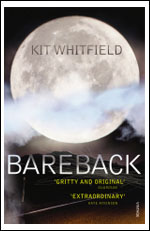
Biology is destiny.
For those born feet-first, life is normal. Civil rights are enshrined in law, the world is a comfortable place, and every full moon night, you lock yourself in a secure room to fur up in peace. But for those born head-first, the damage done is more than just physical. For a non, locked in his or her human skin, is first and foremost a conscript, drafted at eighteen into DORLA, the Department for the Ongoing Regulation of Lycanthropic Activity.
For a DORLA agent, insultingly referred to as a 'bareback', full moon creates a battle zone, where they patrol the silent night in search of citizens breaking the curfew. The rest of the month is a civil service nightmare, mopping up the after-effects of the trespasses, the fights and the maulings. DORLA has lasted centuries, since the Inquisition first set it up, and it's no less hated now than it was then.
Lola Galley, twenty-eight and already a scarred veteran, is assigned to defend a curfew-breaker who mutilated a good friend of hers. She doesn't want the case, but she's used to doing things she doesn't want. Only something happens: her maimed friend is murdered before her client can be tried.
Lola wants justice. She'll settle for the truth. But in a divided world, asking for the truth may bring answers that you don't want to hear.
Kit Whitfield has created a world that is wholly, unnervingly convincing. This work shows her to be a novelist of rare gifts and astonishing imagination.